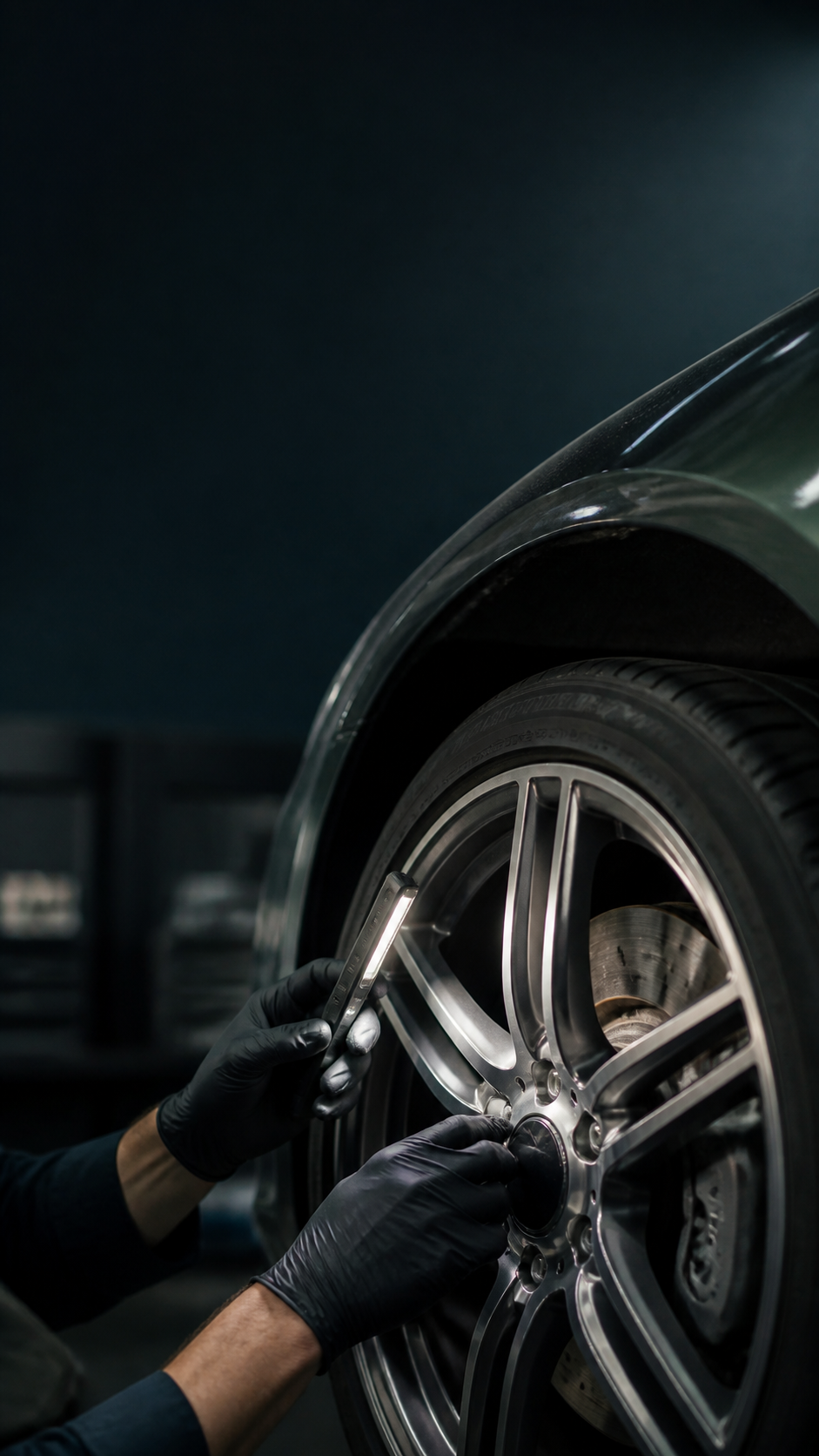
Most vehicle owners have experienced the same uncomfortable phone call.
You drop your car or bike off for a routine service, an oil change, or a minor issue you've noticed. A few hours later, the workshop calls with a list of additional repairs. What started as a ₹1,000 service is now a ₹15,000 estimate, and several of the items are suddenly being described as urgent.
Sometimes those recommendations are completely justified. Parts wear out, components fail, and delaying critical repairs can create safety risks or lead to larger bills later. The challenge is knowing when a recommendation is based on genuine need and when it is being pushed more aggressively than it should be.
The good news is that unnecessary upselling often follows recognizable patterns.
1. You're Told a Part Is Dangerous, but Nobody Can Give You the Measurement
Many critical wear items have clear replacement limits defined by the manufacturer.
Brake pads have a minimum thickness. Tire tread can be measured. Brake discs have wear limits stamped by the manufacturer. These are not subjective judgments.
If a service advisor says your brakes are "finished" or your tires are "completely worn out," ask for the actual measurement.
A technician who has completed a proper inspection should be able to tell you exactly how much material remains and how close it is to the replacement limit.
Without that information, you're being asked to make a decision based on opinion rather than evidence.
There is a significant difference between a component that should be monitored over the next few months and one that needs immediate replacement before the vehicle leaves the workshop. Measurements help determine which category the repair actually falls into.
2. The Workshop Wants an Immediate Approval
A rushed decision is often a bad decision.
Many repair approvals happen while customers are at work, in meetings, or dealing with other distractions. The advisor quickly reads through a list of parts and labor charges and then asks for approval so repairs can begin immediately.
In that moment, most people don't have the information needed to make an informed decision.
They haven't seen the costs broken down. They haven't compared options. They haven't had time to think about whether every item is truly necessary.
Slow the process down.
Ask for a written estimate showing parts and labor separately. A legitimate repair remains legitimate after you've had ten minutes to review the details.
Any workshop that values transparency should be happy to provide an itemized quotation before beginning additional work.
3. The Recommendation Doesn't Match the Manufacturer's Service Schedule
Your owner's manual is one of the best tools for identifying unnecessary maintenance.
Manufacturers spend years testing their vehicles and defining when fluids, filters, spark plugs, belts, and other components need attention. Those schedules are designed to balance reliability, performance, and cost.
Problems arise when workshops begin recommending additional services with no clear connection to the maintenance schedule.
Engine flushes, injector cleaning packages, fuel treatments, decarbonization services, and various chemical additives are frequently presented as essential maintenance even when the vehicle is running normally.
That doesn't automatically mean these services have no value. Certain operating conditions and specific engine problems may justify them.
The question is whether the service is solving a real problem or simply adding cost to the invoice.
Before approving any add-on service, ask two simple questions:
"*What issue is this intended to fix?*"
"*Where does the manufacturer recommend it?*"
Clear answers should follow both questions.
4. Nobody Can Clearly Explain What's Wrong
A genuine fault should be easy to describe.
If a wheel bearing is failing, the technician should be able to explain the noise or movement they observed. If a suspension component is worn, they should be able to identify the damaged part and describe how it affects the vehicle.
Be cautious when explanations become vague.
Statements such as "It's worn out," "the assembly is weak," or "it's getting bad" don't actually explain the problem.
A customer shouldn't need a mechanical engineering degree to understand a repair recommendation. The advisor should be able to describe the defect in simple language and explain the consequences of leaving it unrepaired.
The more expensive the repair, the more detailed the explanation should be.
If nobody can clearly articulate what has failed, why it has failed, and what symptoms it is causing, it's reasonable to ask more questions before approving the work.
5. Suddenly Everything Needs Replacing
One of the most common upselling scenarios occurs during an otherwise routine service visit.
You bring in a vehicle with no major concerns and receive a list that includes brake pads, brake discs, suspension bushes, engine mounts, battery replacement, injector cleaning, wheel alignment, and several other items.
Each recommendation may sound reasonable when discussed individually.
The problem is that every item is being presented as urgent.
In reality, vehicle components rarely reach the end of their life at exactly the same moment. Some repairs may genuinely require immediate action. Others may have months, or even years, of useful life remaining.
Whenever you're presented with a long repair list, ask the workshop to separate the work into two categories:
Repairs required immediately for safety or reliability.
Repairs that can be planned for a future service.
A trustworthy workshop will help you prioritize. An aggressive salesperson will often insist that everything is equally urgent.
How to Protect Yourself Without Ignoring Genuine Repairs
The goal isn't to reject maintenance. The goal is to make informed decisions.
Whenever a workshop recommends additional work:
- Ask for measurements on wear-related components.
- Request a written, itemized quotation.
- Compare recommendations against the manufacturer's maintenance schedule.
- Ask for a clear explanation of the defect and its impact.
- Separate immediate repairs from future maintenance items.
The best workshops don't fear customer questions. In fact, they welcome them.
When a repair is genuinely necessary, the evidence will support the recommendation. If the recommendation becomes weaker the more questions you ask, that's often a sign that the repair wasn't as urgent as it first appeared.
Join the conversation
Sign in to Xeomoto to share a respectful comment. New comments are reviewed before publication.